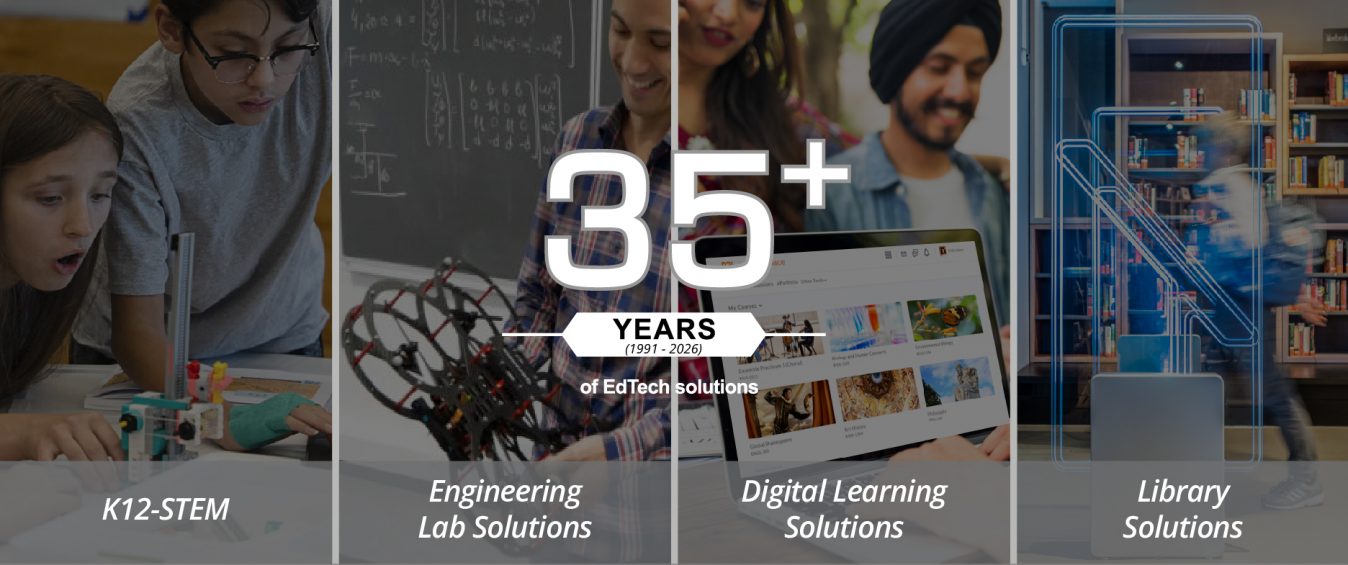
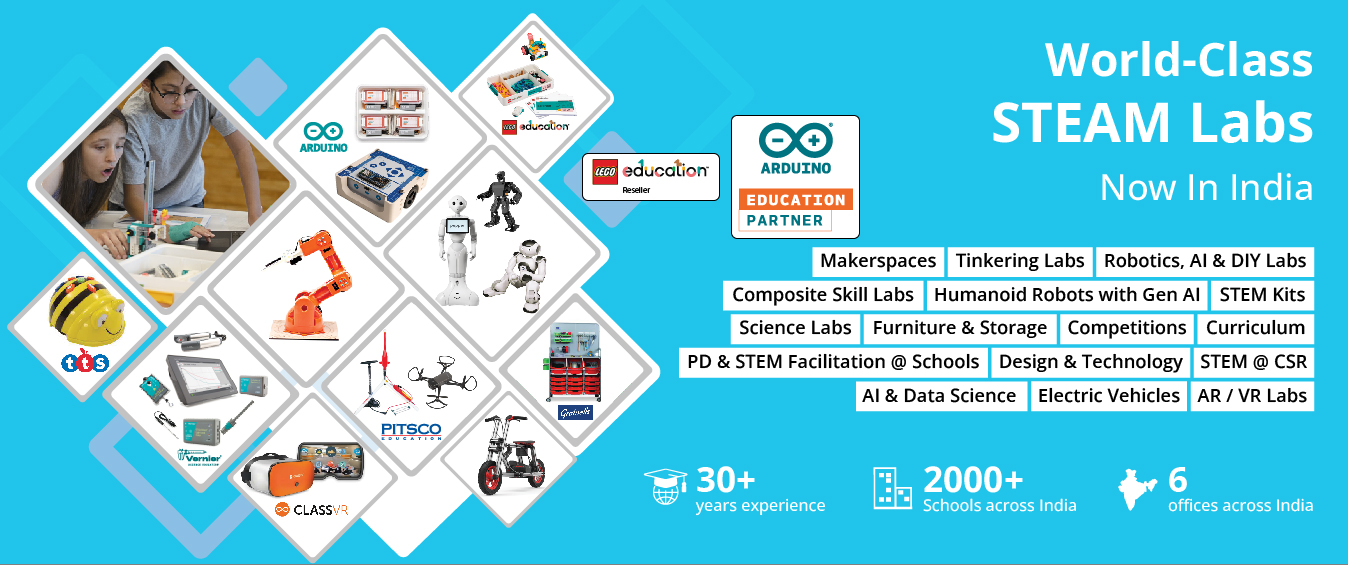
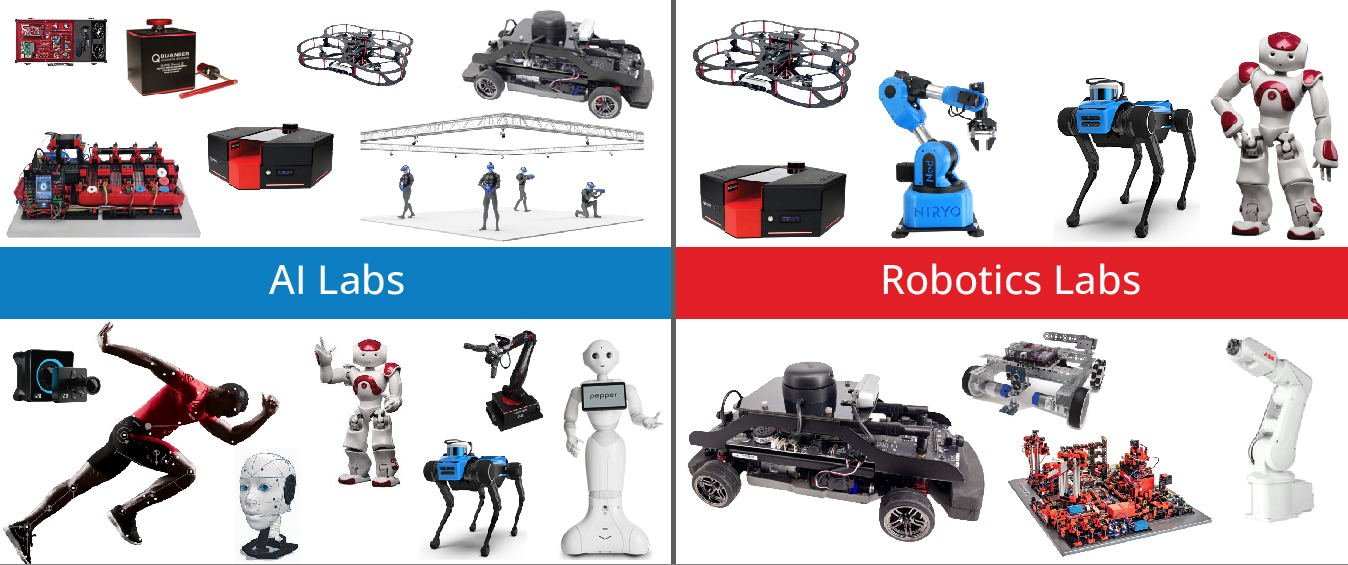
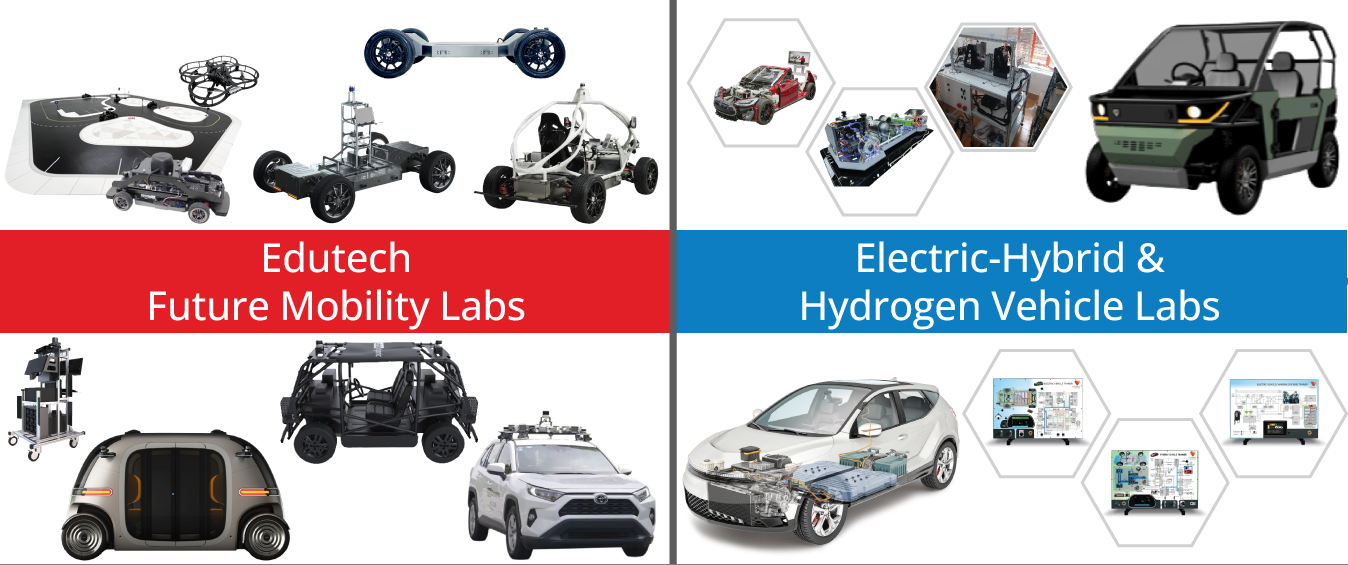
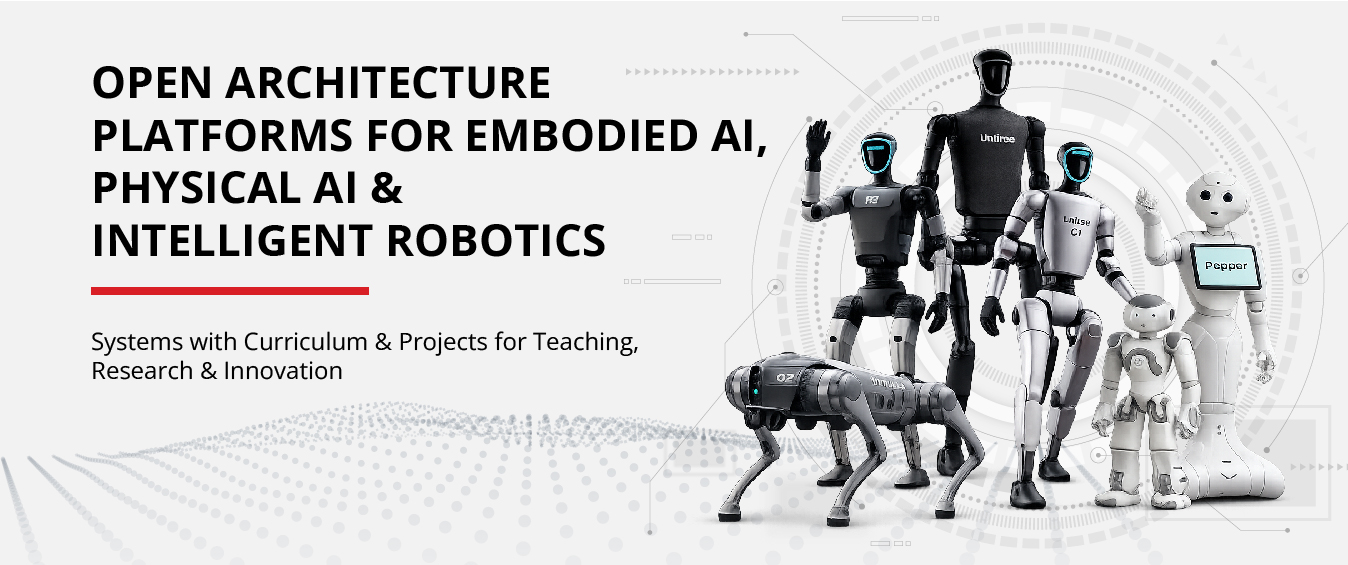

Since 1991, Edutech has empowered academia and industry with world-class physical and digital solutions. We deliver educational and research equipment for core engineering and emerging technology labs in higher education and enterprises, innovation STEAM labs for K-12 Schools and future-ready digital learning and library solutions for institutions, corporates and government programs.

about us

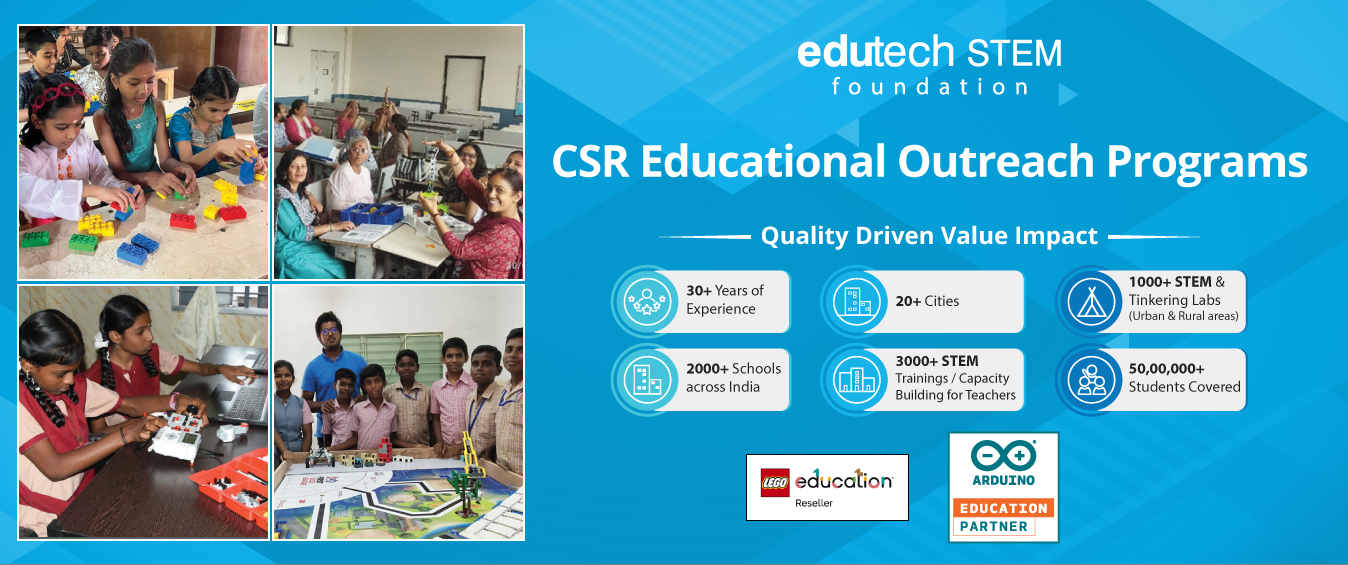
Schools across India

2000+

Schools across India

Higher Education

1000+

Higher education institutions, 90% Tier 1 Govt and Private technical institutes

Corporate Entities

100+

Corporate entities across IT/ Consulting, Manufacturing, Banking and Services Industry

our solutions

STEM Kits & Robotics

K12-STEM

Innovation tools and hands-on kits to promote experiential learning in science, technology, engineering and mathematics for school students.

Engineering-Lab-Solutions

Engineering Lab Solutions

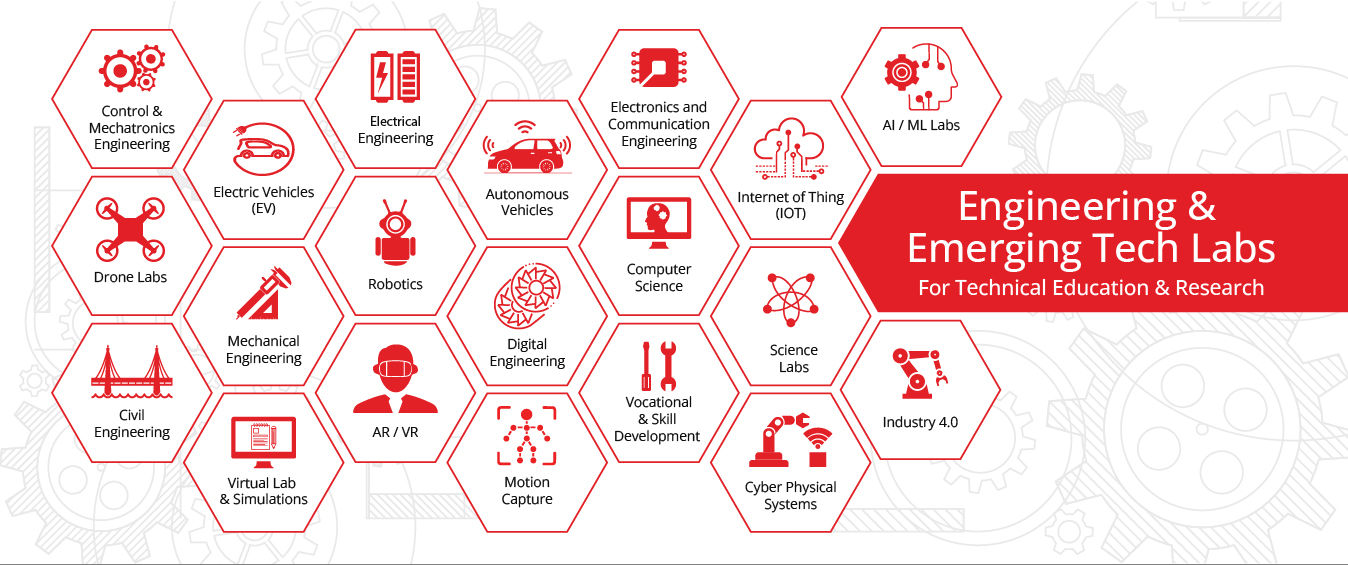
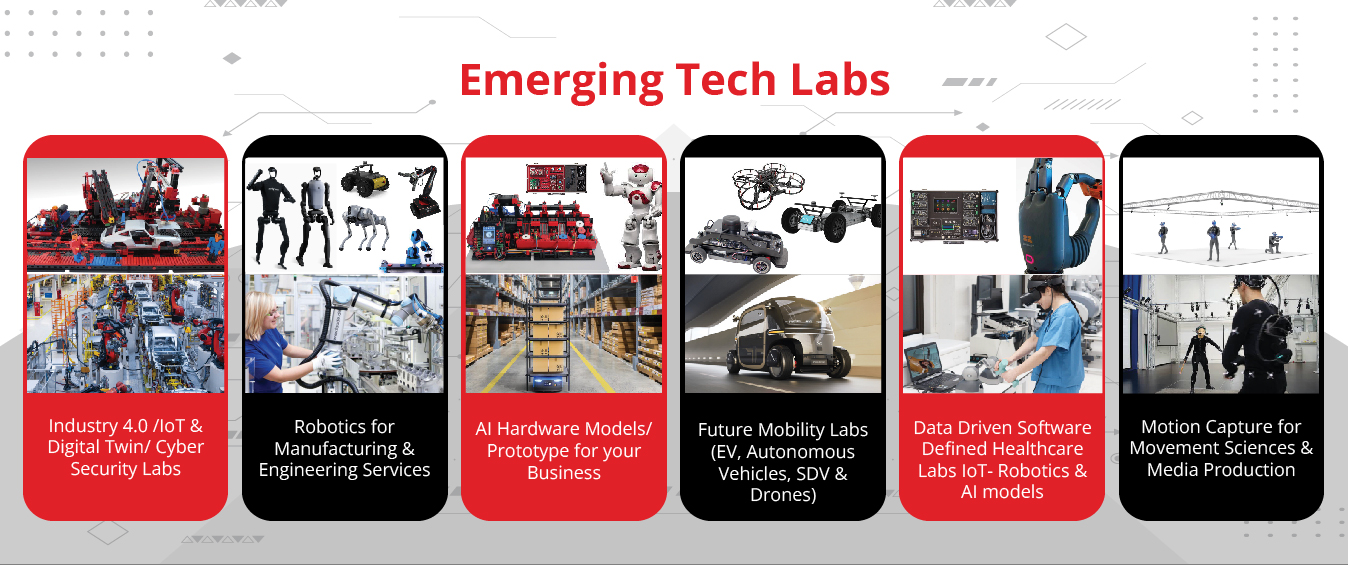
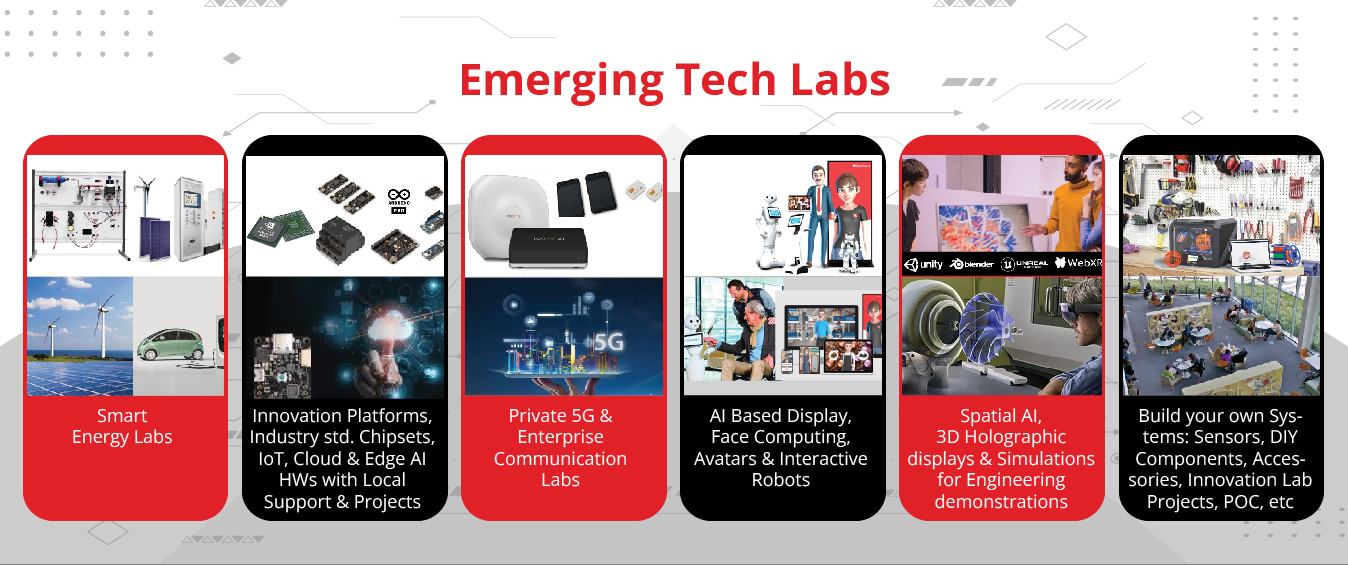
Advanced lab setups and equipment to support practical learning in core engineering and emerging technologies like Ai, Autonomous Vehicles, IoT and Robotics.

Digital Learning Solutions

Digital Learning Solutions

Next-generation digital learning ecosystems that transform online education and redefine the learning experience.

RFID-Gate

Library Solutions

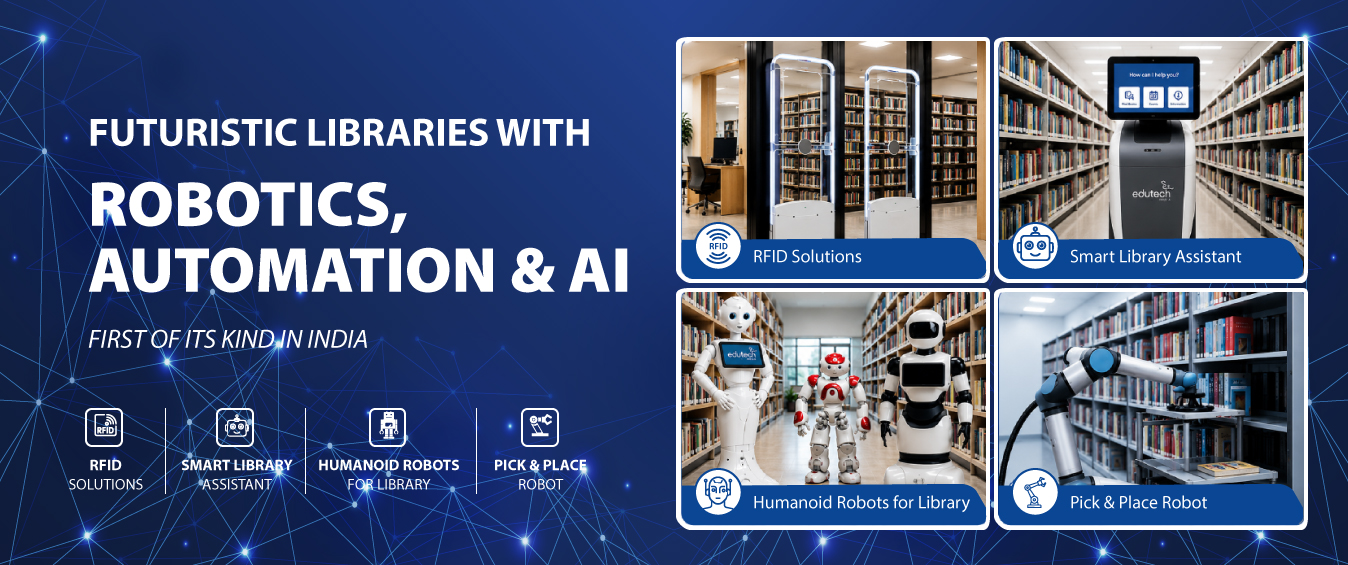
Smart libraries with RFID, AI & cutting-edge technologies for seamless check-in/out, smarter inventory and robust security with unmatched efficiency and user experience.

K12 - Education

K12 - Education

STEM Education

STEM Education

Edutech Outreach Services

Edutech Outreach Services

Vocational Education

Vocational Education

Higher Education

Higher Education

Corporate Government

Corporate Government

our partners

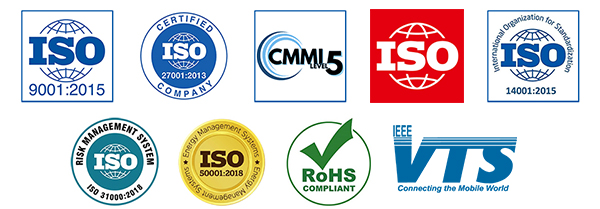
certificates
FAQs

Category: FAQs

Turnkey laboratory solutions provide a single point of responsibility for planning, equipment procurement, installation, curriculum integration, faculty training, documentation, warranty, maintenance, and technical support. This approach reduces implementation complexity, improves accountability, and helps institutions achieve faster deployment with consistent learning outcomes.

Category: FAQs

Embodied AI Labs provide students with practical experience in robotics, autonomous systems, reinforcement learning, AI perception, navigation, and intelligent decision-making. These labs help students build interdisciplinary skills required for careers in robotics, AI research, automation, healthcare robotics, and smart manufacturing.

Category: FAQs

Embodied AI refers to intelligent systems that learn and interact through a physical body such as robots, autonomous vehicles, drones, and smart devices. It combines Artificial Intelligence, robotics, perception, motion planning, and human-machine interaction, making it an emerging field for engineering and research institutions.

Category: FAQs

A Physical AI Lab enables students to develop intelligent robotic systems, autonomous machines, drones, and industrial automation solutions by combining AI with real-world hardware. These laboratories support research, innovation, and practical learning aligned with Industry 4.0 and future technology trends.

Category: FAQs

Physical AI refers to Artificial Intelligence that interacts with the physical world through robots, autonomous systems, drones, sensors, and smart machines. Unlike software-only AI, Physical AI enables machines to perceive, understand, and respond to real-world environments using computer vision, robotics, and intelligent control systems.

Category: FAQs

Quadruped Robots are four-legged robotic platforms capable of navigating complex terrain using advanced AI, sensors, computer vision, and autonomous control. They are increasingly used in engineering education for research in robotics, AI, autonomous navigation, and intelligent mobility.

Category: FAQs

Humanoid Robots are AI-powered robots designed to resemble human appearance and behavior. In educational institutions, they are used to teach Artificial Intelligence, Robotics, Computer Vision, Human-Robot Interaction, Programming, and Autonomous Systems through practical demonstrations and research projects.

Category: FAQs

A complete Arduino Lab typically includes Arduino boards, sensors, actuators, communication modules, IoT devices, project kits, experiment manuals, curriculum, faculty training, installation, and technical support to ensure effective learning.

Category: FAQs

An Arduino Lab helps students learn embedded systems, electronics, IoT, automation, robotics, and programming using Arduino development boards, sensors, actuators, and real-world projects. Arduino-based learning promotes innovation, rapid prototyping, and hands-on engineering skills.

Category: FAQs

Schools can implement LEGO® Education Computer Science & AI and LEGO® Education Science as complete classroom solutions that include classroom kits, curriculum-aligned lesson plans, teacher training, implementation support, and ongoing academic assistance. These solutions help educators deliver hands-on learning in Computer Science, Artificial Intelligence, AI literacy, scientific inquiry, problem-solving, and collaborative learning while reducing preparation time through ready-made teaching resources.

Category: FAQs

LEGO® Education Computer Science & AI is a classroom-ready solution that enables students to learn computer science, coding, algorithms, AI concepts, and AI literacy through hands-on, collaborative activities. The solution combines interactive hardware, physical LEGO® bricks, curriculum-aligned lessons, and a teacher portal with ready-to-use lesson plans, presentations, assessments, and facilitation guides, making it easier for schools to integrate Computer Science and Artificial Intelligence into everyday learning.

Category: FAQs

Artificial Intelligence Labs allow students to build real-world AI applications using modern tools and datasets. Through hands-on projects, hackathons, workshops, and industry-aligned curriculum, students gain practical skills that improve employability in AI, data science, automation, robotics, and software engineering.

Category: FAQs

An Artificial Intelligence (AI) Lab provides students with practical exposure to Machine Learning, Deep Learning, Computer Vision, Natural Language Processing (NLP), Generative AI, Data Science, and intelligent automation. A complete AI Lab includes hardware, software, curriculum, faculty training, project kits, and industry-oriented learning resources.

Category: FAQs

A modern Control Engineering Lab typically includes control system trainers, PLC kits, process control systems, servo motors, sensors, data acquisition systems, simulation software, experiment manuals, faculty training, and maintenance support. Institutions should choose solutions that align with AICTE and university curriculum requirements.

Category: FAQs

A Control Engineering Lab enables students to understand and experiment with control systems, automation, PID controllers, process control, PLCs, sensors, actuators, and industrial automation concepts. These laboratories help bridge theoretical learning with practical applications and prepare students for careers in manufacturing, automation, robotics, and Industry 4.0.

Category: FAQs

A complete Engineering Lab Solution includes laboratory equipment, installation, curriculum mapping, experiment manuals, faculty training, software (where applicable), commissioning, warranty, annual maintenance, technical support, and student workshops. Institutions generally prefer turnkey Engineering Lab Solutions because they simplify procurement, implementation, and long-term maintenance.

  • Michaelsow says:

    mexican pharmacy price list pharmacy in mexico online or mexican pharmacy store

  • Leave a Comment

    Your email address will not be published. Required fields are marked *

    Category: FAQs

    Yes. Modern Engineering Lab Solutions can be customized to meet AICTE guidelines, NEP 2020 recommendations, university syllabi, outcome-based education (OBE), accreditation requirements, and institution-specific learning objectives. Customized laboratories help institutions align practical education with current academic and industry standards.

    Category: FAQs

    A reliable laboratory solution provider should offer installation support, commissioning, preventive maintenance, annual maintenance contracts (AMC), warranty, software updates, technical assistance, calibration (where applicable), spare parts availability, and prompt service support to maximize the laboratory's lifespan.

    Category: FAQs

    Yes. Leading Engineering Lab and STEM Lab providers generally offer faculty development programs, curriculum alignment, experiment manuals, lesson plans, practical guides, student project support, workshops, and periodic refresher training to ensure effective utilization of the laboratory.

    Category: FAQs

    The implementation timeline depends on the laboratory type, infrastructure readiness, customization requirements, procurement process, and installation scope. A professional turnkey implementation typically includes planning, equipment delivery, installation, testing, faculty training, commissioning, and post-installation support before the lab becomes operational.

    Category: FAQs

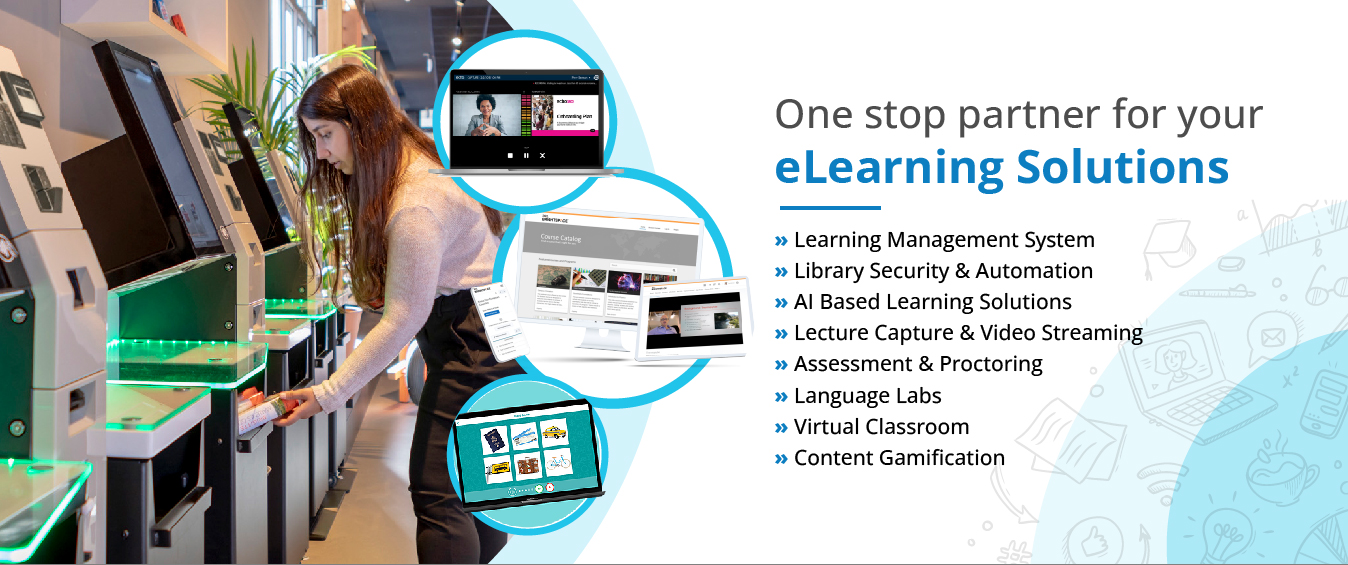
    Library Automation Solutions use technologies such as RFID, barcode systems, self-check kiosks, library management software, digital catalogues, and inventory tracking to improve library operations. These solutions reduce manual work while improving circulation, security, and the overall user experience for students and staff.

    Category: FAQs

    An LMS (Learning Management System) is used to manage courses, assignments, assessments, attendance, progress tracking, and learner performance. An eLearning Solution includes the LMS along with digital content, virtual classrooms, assessments, collaboration tools, analytics, and learner engagement features that support both online and blended learning.

    Category: FAQs

    An Autonomous Vehicle Lab provides practical learning in autonomous navigation, ADAS technologies, sensors, LiDAR, computer vision, AI, embedded systems, robotics, and vehicle control systems. These labs help engineering students develop skills aligned with future mobility and smart transportation technologies.

    Category: FAQs

    Electric Vehicle (EV) Labs enable students to understand battery technology, electric motors, battery management systems (BMS), motor controllers, charging infrastructure, power electronics, and EV diagnostics. These laboratories prepare students for careers in India's rapidly growing electric mobility sector through practical learning and industry-aligned projects.

    Category: FAQs

    An AI and Robotics Lab may include AI workstations, robotics kits, embedded systems, IoT development boards, sensors, autonomous robotics platforms, programming software, project kits, simulation tools, curriculum, faculty training, and student project resources. The exact configuration depends on the institution's academic objectives.

    Category: FAQs

    AI Labs are dedicated learning environments where students gain practical experience in Artificial Intelligence, Machine Learning, Computer Vision, Data Science, and Generative AI through hands-on projects. A well-designed AI Lab includes hardware, software, curriculum, faculty training, project kits, and industry-oriented learning resources.

    Category: FAQs

    When selecting an Engineering Lab vendor, institutions should evaluate industry experience, installation history, product quality, curriculum support, faculty training, local service network, warranty, availability of spare parts, annual maintenance services, and technical support. Choosing a vendor that offers complete lifecycle support helps ensure long-term usability of the laboratory.

    Category: FAQs

    The cost of a STEM Lab depends on factors such as school level (Primary, Middle, or Senior), number of students, curriculum requirements, available space, equipment selection, robotics kits, AI modules, teacher training, and annual support. Institutions should evaluate the total value offered, including implementation, curriculum, training, and after-sales service rather than comparing equipment prices alone.

    Category: FAQs

    A turnkey STEM or STEAM Lab provider should offer curriculum-aligned STEM kits, furniture, installation, teacher training, lesson plans, student activities, maintenance support, and periodic workshops. Schools should choose a vendor that provides both the technology and ongoing academic support instead of only supplying equipment.

    contact us

    Tel: +91 44 2833 0999
    Email: infoindia@edutech.com

    office locations

    Chennai | Bangalore | Hyderabad | Mumbai | Kolkata | New Delhi | Guwahati