

World Class Hardware

Software Ecosystem

Installation & Support
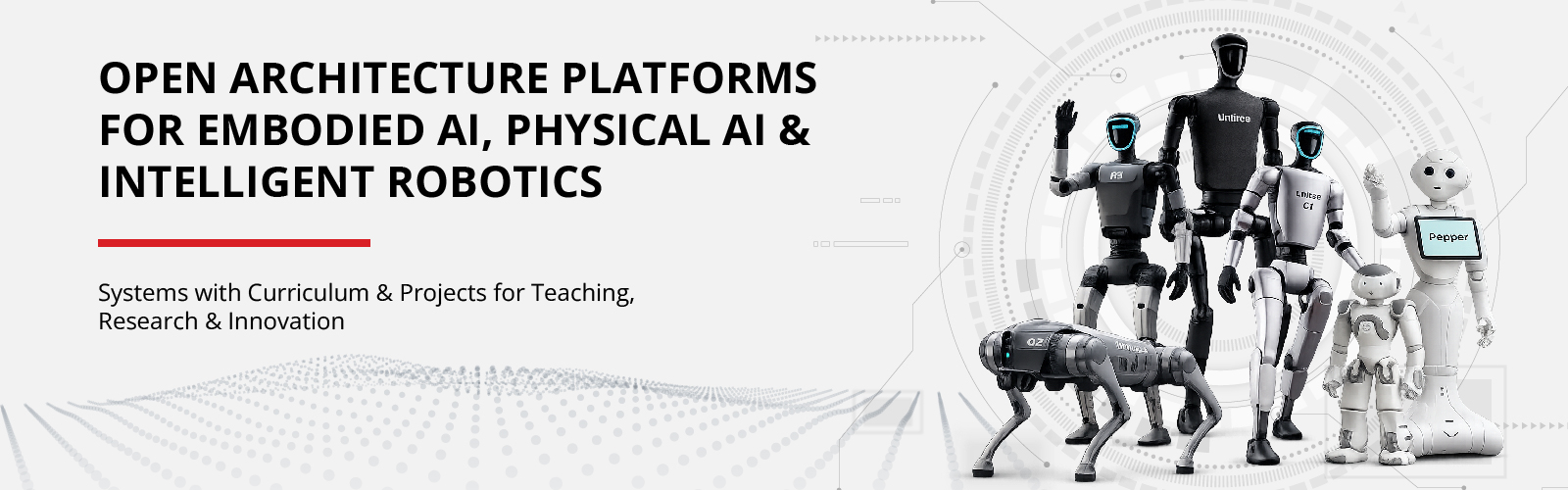
The next generation of AI systems will perceive, reason, move and interact with the real world through physical embodiments such as humanoids and quadruped robots. Edutech's Open Architecture Robotics Platform enables universities to teach, experiment and innovate across the complete Physical AI technology stack.
AI is no longer limited to software - it is moving into intelligent robots that can sense, think, move and interact with the real world. Open Architecture Robotics Platforms help universities build hands-on capability in Embodied AI, Physical AI and Intelligent Robotics through world-class hardware, software ecosystem, curriculum and projects. Designed for teaching, research and innovation, the platform supports learning across Perception, SLAM, AI Agents, Reinforcement Learning, Motion Control, Human-Robot Interaction and Real-World Robotics Applications.
COMPLETE RESEARCH STACK

PERCEPTION
- Cameras
- Depth Sensors
- LiDAR
- Sensor Fusion

LOCALIZATION & MAPPING
- SLAM
- Navigation
- Multi-sensor Fusion

DECISION INTELLIGENCE
- AI Agents
- Vision Language Models
- Reinforcement Learning
- Motion Planning

MOTION & CONTROL
- Whole Body Control
- Balance
- Walking
- Manipulation

HUMAN-ROBOT INTERACTION
- Speech
- Gesture Recognition
- Autonomous Collaboration
IDEAL FOR
- Undergraduate Engineering Programs
- M.Tech & Master's Programs
- PhD Research
- Centres of Excellence
- AI Research Labs
- Robotics & AI Innovation Centres
- Industry Sponsored Labs
- Corporate Innovation & Demonstration labs
- Startup Incubation Centres
DEPARTMENTS
- Computer Science & AI
- Robotics Engineering
- Mechanical Engineering
- Mechatronics
- Electronics & Embedded Systems
- Electrical Engineering
- Aerospace Engineering
- Biomedical Engineering
- Cognitive Science
- Human Computer Interaction
- Design & Innovation Schools
OUTCOMES
- Hands-on AI education
- Publishable research
- Industry collaboration
- Technology demonstrators
- Startup innovation
- Capstone projects
- International research partnerships
OPEN DEVELOPMENT ECOSYSTEM

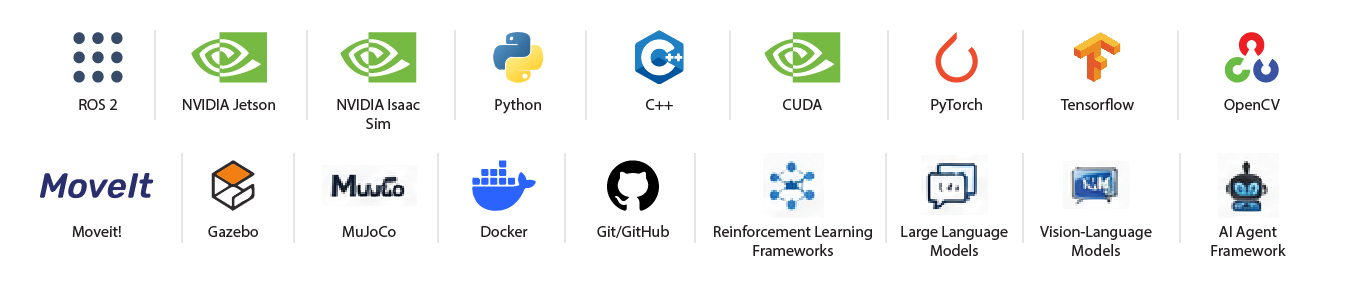
CUTTING EDGE TOOLS AND TECHNOLOGIES
Every module should expose students to modern research tools:
EMBODIED AI RESEARCH CURRICULUM & ACADEMIC ROADMAP
logical progression from fundamentals - perception - intelligence - autonomy - advanced Physical AI, making it well suited for undergraduate, postgraduate, and research programs.

ENTERPRISE DOMAINS AND ACADEMIC DEPARTMENTS
- Computer Science
- AI & Data Science
- Mechanical
- Electronics
- Mechatronics
- Electrical
- Biomedical
- Aerospace
- Design
- Psychology
USE CASES
- AI Agents, LLMs, VLMs
- Reinforcement Learning
- Dynamics & Locomotion
- Embedded Systems
- Robot Design
- Motor Control
- Rehabilitation Robotics
- Autonomous Navigation
- Human Robot Interaction
- Social Robotics
- Product R&D
- CoE and Innovation Labs
- Demonstrator and Event Showcases
NEW CREATURE OF EMBODIED AI
New and Improved | Returning with Glory
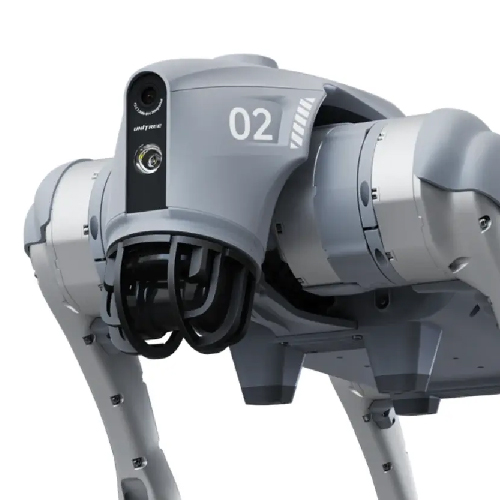
Embodied AI in Action
Go2 features with Unitree's self-developed 4D LIDAR L1 with 360* x 90* hemispherical ultra-wide recognition, super small blind spot and a minimum detection as low as 0.05m, which makes Go2 realize all-terrain recognizing.
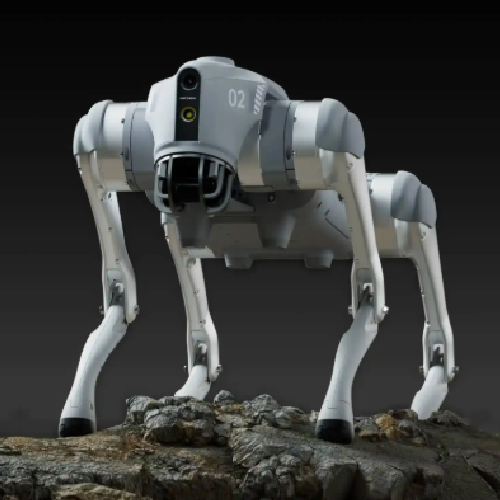
New Intelligence
Intelligent Side - Follow System 2.0
Motor performance enhanced by 30%
Battery capacity and endurance upgraded by 150%
Various Actions and Poses
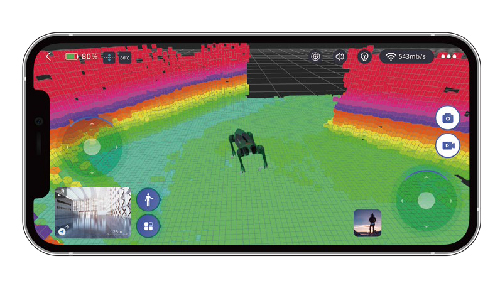
Intelligent Avoidance Precise and Agile
Equipped with 4D LiDAR L1, the robodog detects, captures and draws the 3D real world for user.
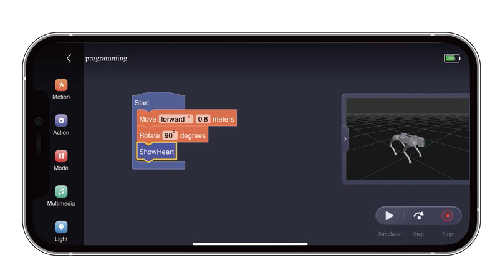
Graphical Programming Simple Yet Smarter
Optimise the graphical programming function, make it easy to complete the program design by simple drag, drop and connection. Make programming beginners easy to start and innovate.
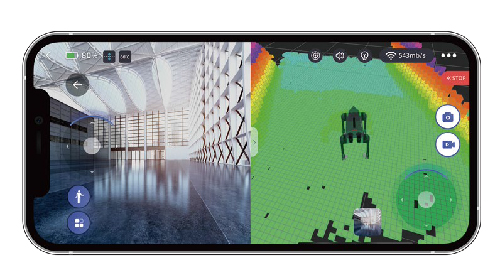
Hd Picture Quality Real-time and Stable
A new App realizes HD image transmission and real-time remote control. Built-in 4G and eSIM enables more stable connection and remote control.
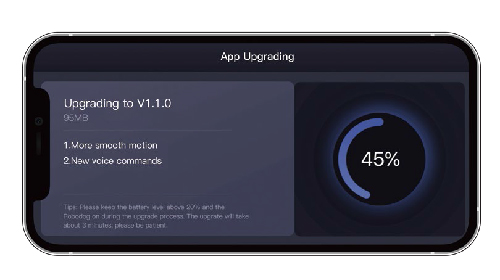
OTA Upgrades
Keep Improving and Evolving to be Smarter
With user authorization, the robot automatically connects to a cloud-based OTA service to upgrade its own programs to continuously improve the user experience.
UNITREE - ULTRA LIGHT WEIGHT, AGILE MOTION
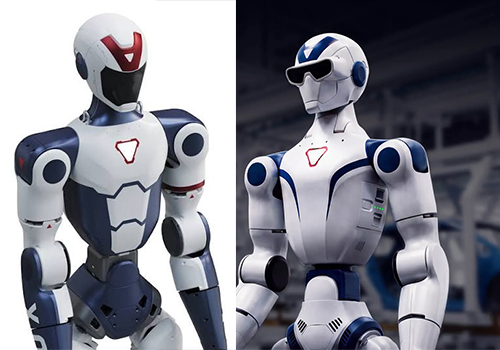
Unitree Is a lightweight humanoid robot designed for agile motion, omni-directional perception and real-world AI interaction. With 20–26 degrees of freedom, speech and vision-based multimodal AI, open joint and sensor interfaces, and simulation platform support, it helps students and researchers deploy algorithms into the physical world.
What Makes R1 Research-Ready
It enables students and researchers to explore Embodied AI through agile humanoid motion, speech and vision-based interaction, open sensor interfaces, and simulation-supported real-world algorithm deployment.
- Ultra-Lightweight Design
- Agile Motion & Natural Movement
- Omni-Directional Perception
- Multimodal AI Interaction
- Open Joint & Sensor Interfaces
- Simulation Platform Support
- Move First, Execute Tasks
- Smart Battery
- Computing Module
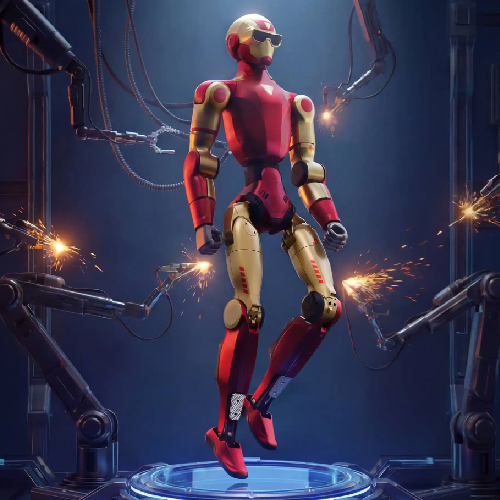
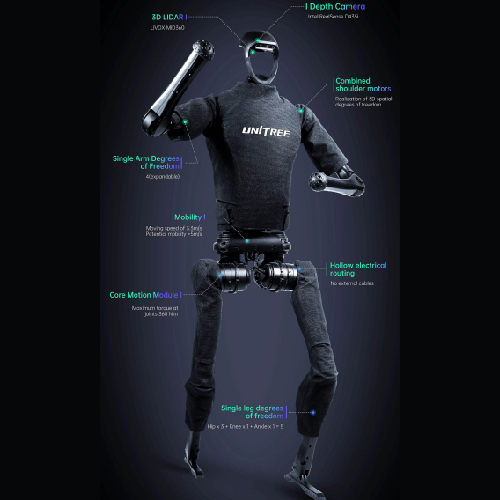
First General-purpose Humanoid Robot
Unitree H1 Full-size universal humanoid robot
- Body Size Value Height about 180CM Weight about 47kg
- Peak Torque Density 189N.m/Kg
- Mobility Moving speed of 3.3m/s (world record) Potential mobility > 5m/s
- Endurance Battery capacity: 864Wh, quickly replaceable
- Maximum Joint Torque 360N.m
- 360˚ Depth Sensing 3D LIDAR + Depth Camera
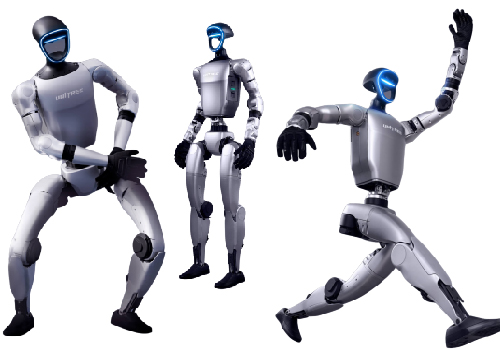
- Flexibility Beyond Ordinary People.
- Imitation & reinforcement Learning Driven.
- Force Control Dexterous Hand, Manipulation of all things.
- Robot World Model, Lets Create it together.
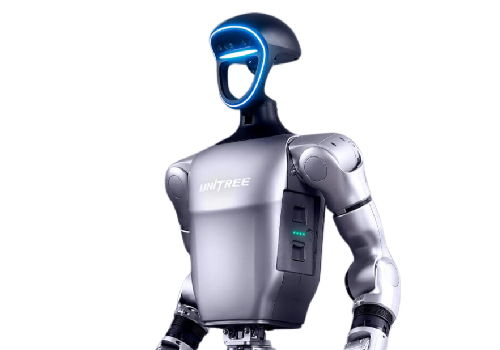
- BODY SIZE VALUE Weight About - 35kgHeight About - 127 cm
- BATTERY LIFE - About 2 hours
- MAX JOINT TORQUE 120 N.m
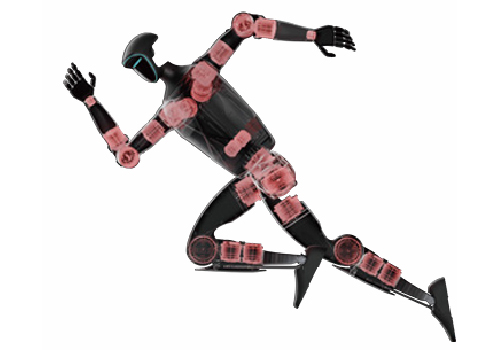
- TOTAL DEGREES OF FREEDOM 43 Pieces
- 360 DEPTH PERCEPTION 3D LIDAR + Depth Camera
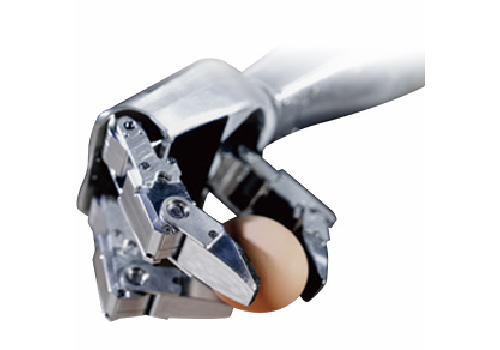
- DEX 3-1 FORCE CONTROL DEXTEROUS HAND
- 3 Finger Force Control Dexterous Hand
- Optional installation of tactile sensor arrays
AI WITH HUMANOID ROBOTS
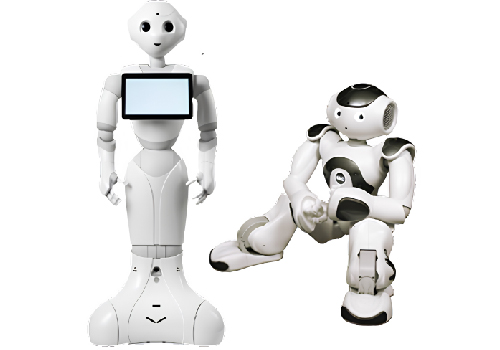
These are humanoid robots designed for AI and robotics education, helping teachers and researchers explore human-machine interaction, cognitive computing, and autonomous navigation.
Over 17,000+ these robots are used in the global education market for AI, robotics and pedagogy.
With their engaging humanoid design and interactive behaviour, they create a strong connection with learners and support new ways of teaching, classroom engagement, and robotics research.
01
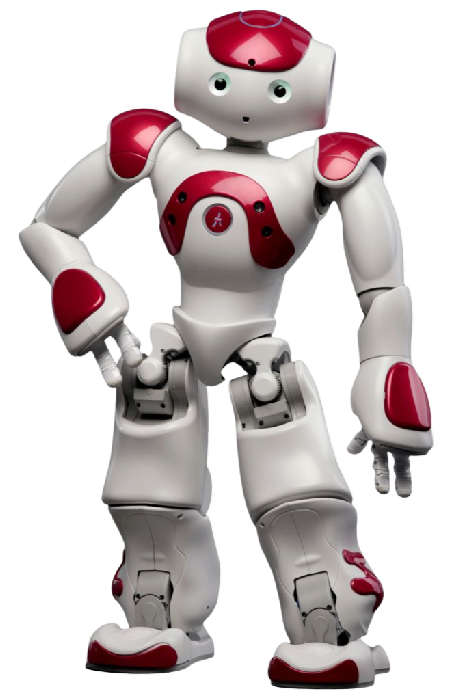
25 degrees of freedom which enable him to move and adapt to his environment
02
7 touch sensors located on the head, hands and feet, sonars and an inertial unit to perceive his environment and locate himself in space
03
4 directional microphones and speakers to interact with humans
04
Speech recognition and dialogue available in 20 languages
English, French, Spanish, German, Italian, Arabic, Dutch, Portuguese, Czech, Finnish, Russian, Swedish, Turkish, ...
05
Two 2D cameras to recognize shapes, objects and even people
06
Open and fully programmable platform